 75°F Clear sky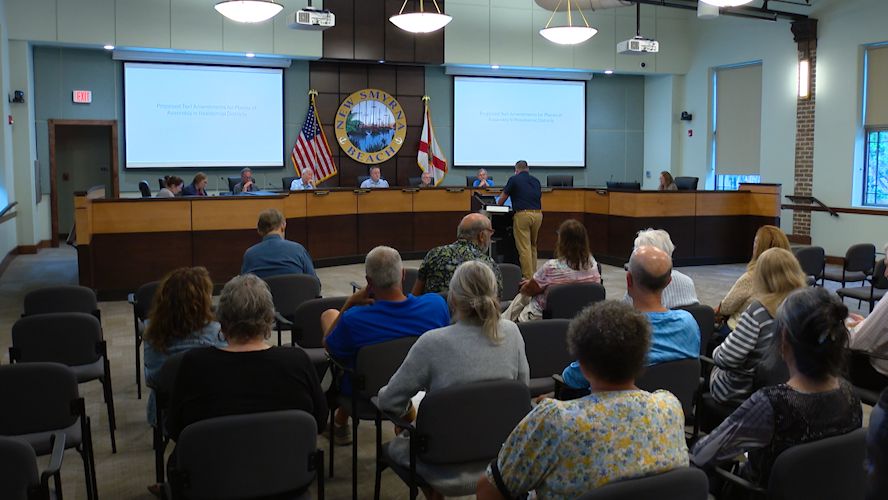
Zoning debate in New Smyrna Beach could shape future growth decisions
The New Smyrna Beach Planning and Zoning Board has approved proposed zoning modifications for places of assembly, sending a recommendation forward to the City Commission after months of public discussion. While the issue centers on New Smyrna Beach, it is the kind of land-use debate that often resonates across Southeast Volusia, including in Edgewater, where residents closely watch how neighboring cities handle growth, buffers and neighborhood compatibility.
The discussion grew out of a request tied to Beachside Baptist Church, which had sought zoning changes connected to a planned expansion. According to the report, that earlier request drew pushback from nearby residents who said larger gatherings could intensify traffic, noise and crowding near homes. City officials said the broader zoning amendment was intended to address those concerns while also clarifying how the city regulates assembly uses such as churches.
What the proposed change would do
The most notable revision would reduce the residential buffer requirement for certain places of assembly from 35 feet to 20 feet, if the City Commission gives final approval. The proposal also includes a method for calculating attendance based on the fire marshal-certified occupancy of the largest assembly space multiplied by the number of events held in a day. In practical terms, that means a facility with a 500-person room and two daily events could be treated as serving 1,000 people in a 24-hour period.
Residents who opposed earlier expansion plans argued that event traffic and noise already affect nearby blocks. One nearby resident told Spectrum News that large gatherings can create overcrowding and disruptions when events are underway. Supporters of the amendment, meanwhile, framed it as a way to make zoning rules more consistent and easier to apply.
Why Edgewater readers may care
Land-use decisions in New Smyrna Beach can influence regional conversations about how fast-growing communities balance religious institutions, event venues and neighborhood protections. Edgewater residents have seen similar tensions around development intensity, traffic and compatibility between established homes and expanding uses. Even though this vote does not apply inside Edgewater city limits, it offers a nearby example of how local governments are trying to define those boundaries.
The proposal is not final yet. The recommendation still must go before the New Smyrna Beach City Commission before any zoning text change takes effect. That next step will likely draw continued attention from residents on both sides of the issue, especially those concerned about whether reduced buffers could change the feel of nearby residential areas.
For Edgewater readers, the takeaway is less about one church and more about a familiar regional question: how much flexibility should cities allow for expanding community institutions when neighbors worry about traffic, noise and scale? That debate is now moving to the commission level in New Smyrna Beach.